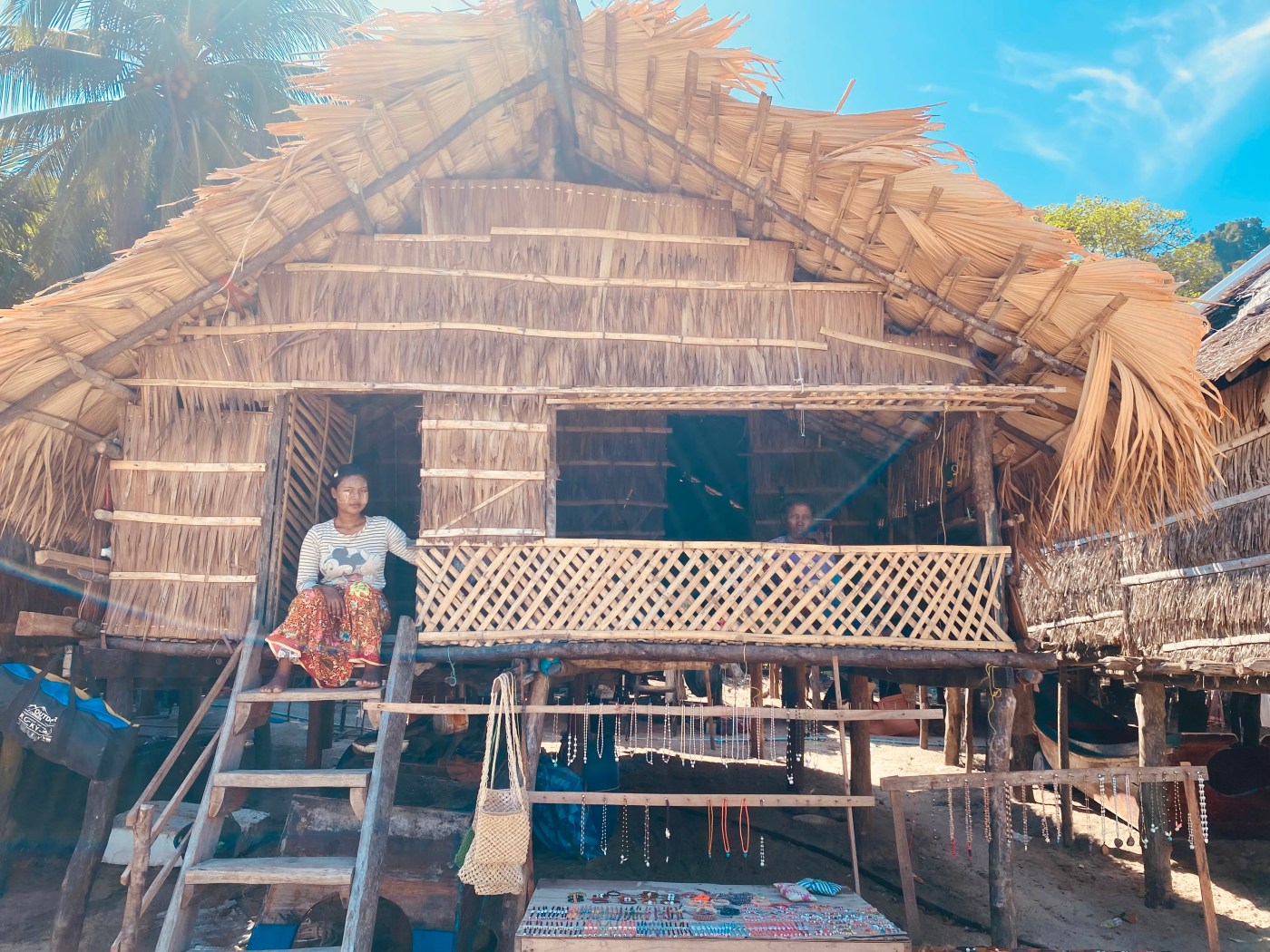
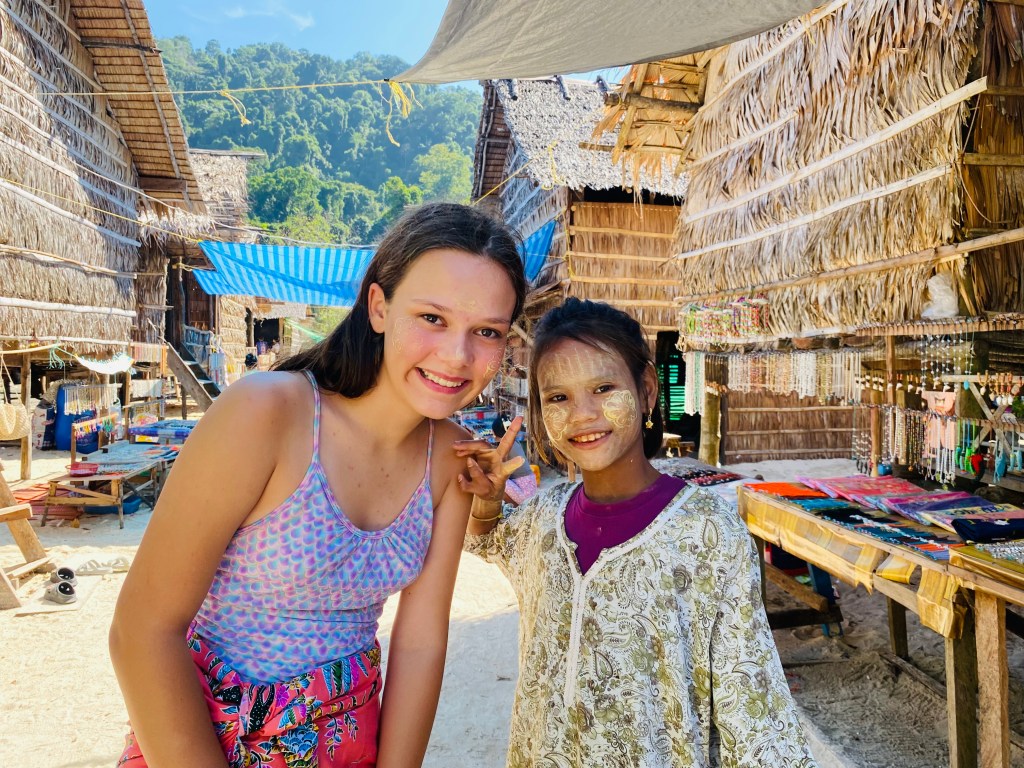
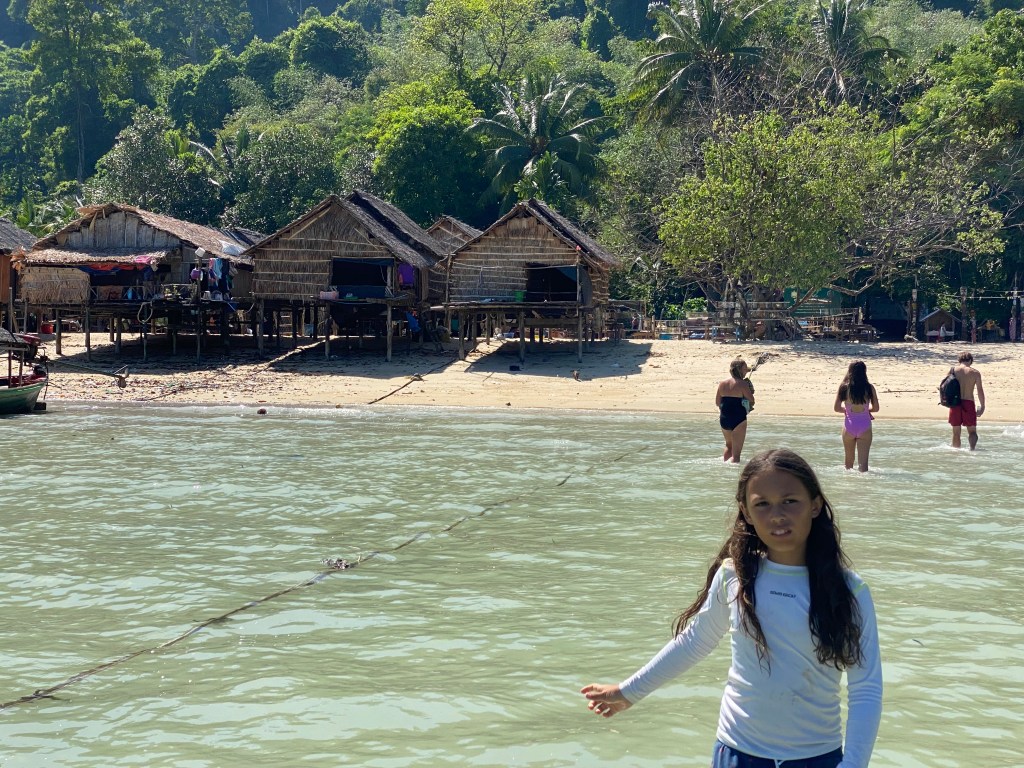
Humans have found so many ways to live on this earth, adapting ourselves to nearly every ecosystem. Old culture and old economies weave inseparable threads with the local environment. Modernity charts an opposite path, severing these threads and altering every environment in order to impose a single culture and economy over it. The Moken culture of the Andaman sea is an old culture, which has likely flowed with the currents and tides for thousands of years. They have lived outside of national boundaries until quite recently, in the seas off the coast of what is now Thailand, Myanmar, and Malaysia. I don’t imagine they ever asked to be folded into these national boundaries, but modern citizenship and assimilation projects pull them into these categories even as the sea’s wild tide continues to hold them outside. We learned, during a visit to a Moken community in the Surin Islands that maybe half of the population has Thai citizenship. This means that the other half has, well, what can it be called? We know that political refugees with no citizenship rights live a tenuous existence. Nearby in Myanmar the Rohingya are an example. Not protected by any nation and persecuted by many. But let us consider the Moken from a different perspective. With no state, and no national citizenship, what kind of citizenship can they claim? Citizenship of the sea? Of that disappearing liminal space like a tidal zone where freedom still is found? Can this nationless half share their citizenship with the coral, the sea turtles, and the clown fish? Shouldn’t we all?
We learned a beautiful story about old stories on this visit. A day, not too long ago, the elders found the sea in an unsettling mood. They recalled the Story of the Seven Rollers, passed down through millenia. They were alarmed and ushered the village to higher ground and in doing so every village member survived the 2004 tsunami, the most destructive natural disaster yet of the 21st century. Old cultures continue to tell new stories.
 Bueno Ramro
January 22, 2026 at 5:18 pm
Love your writing, as always thought provoking. Thank you!
LikeLike