by Celia
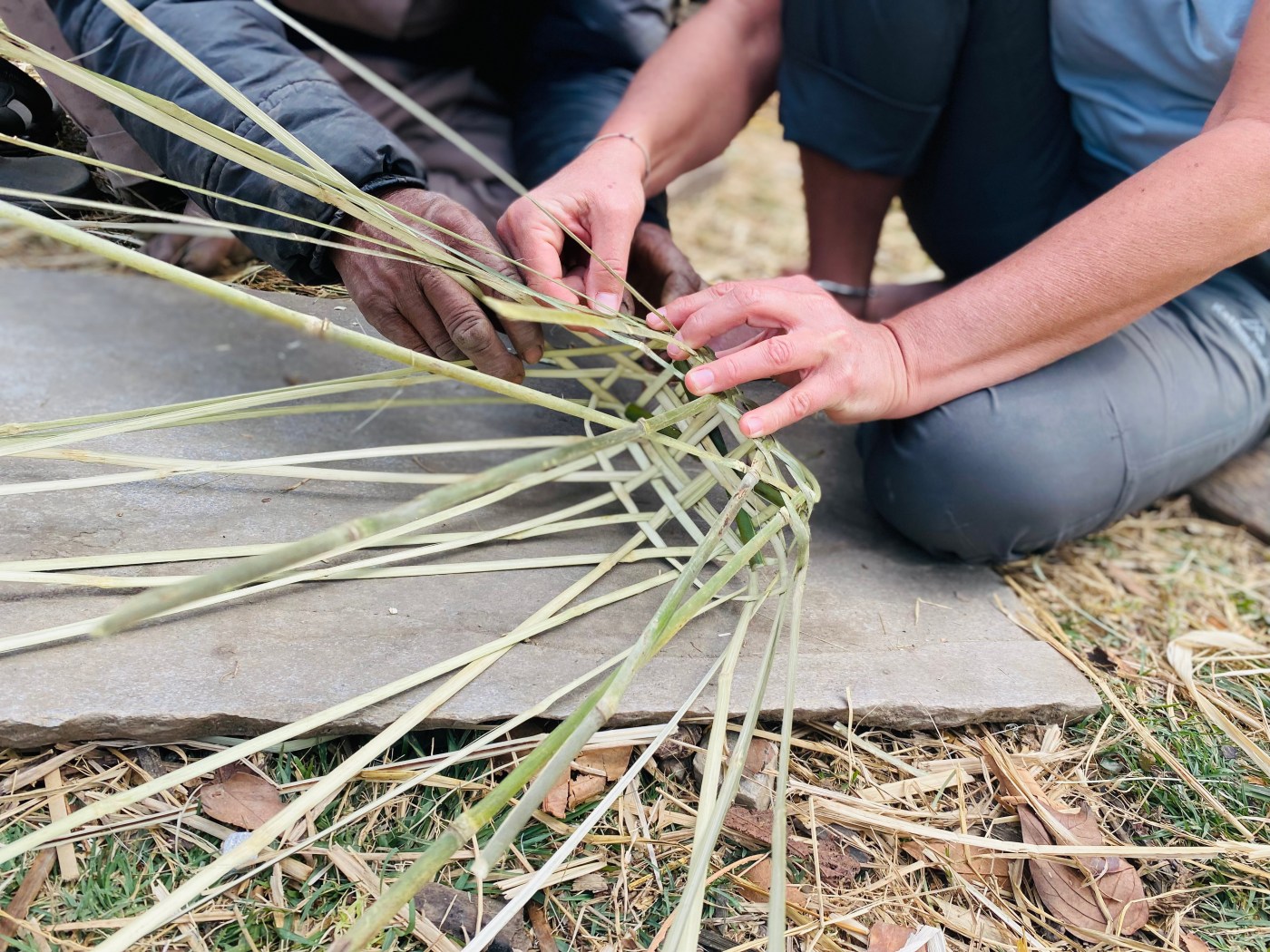
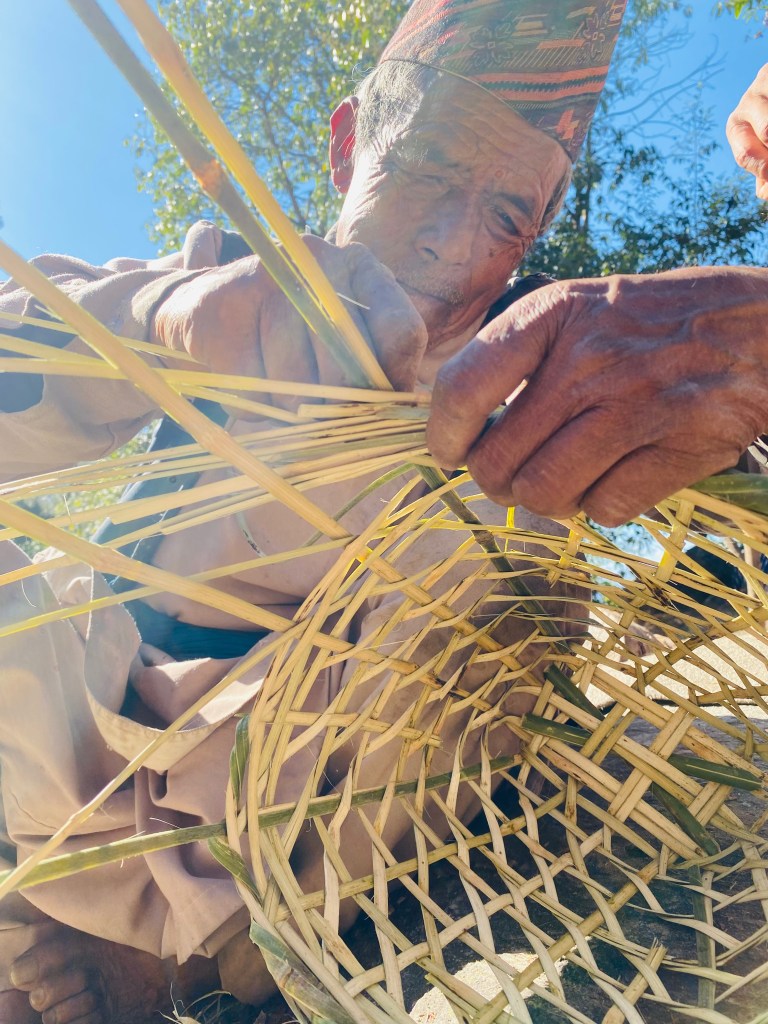
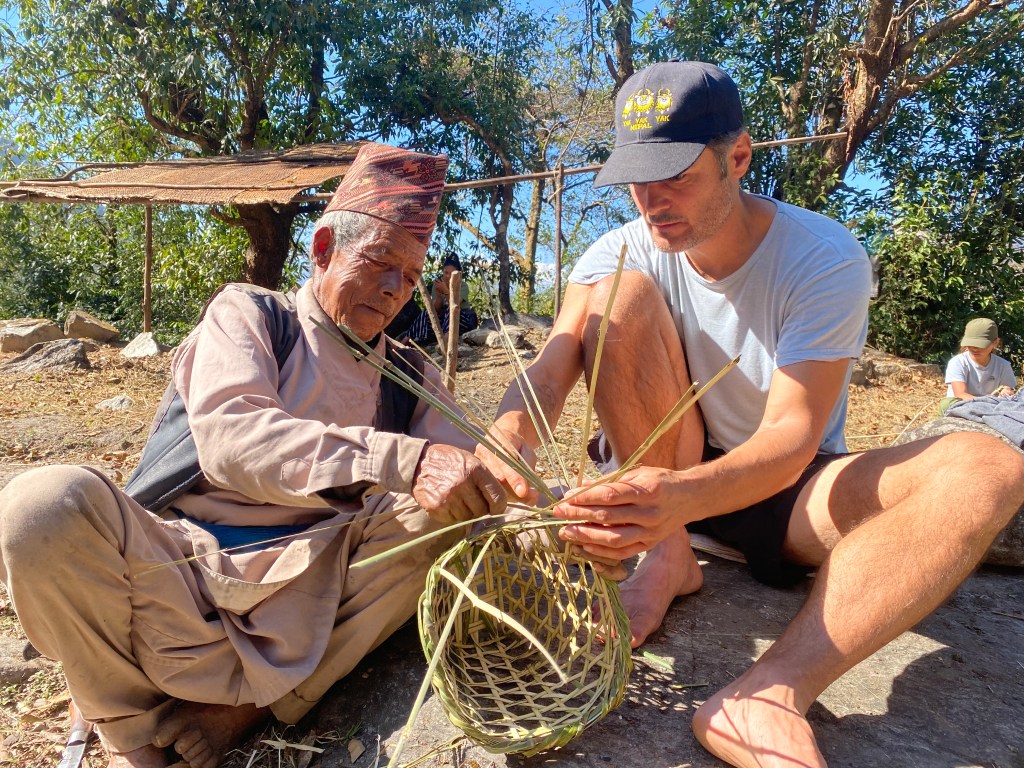
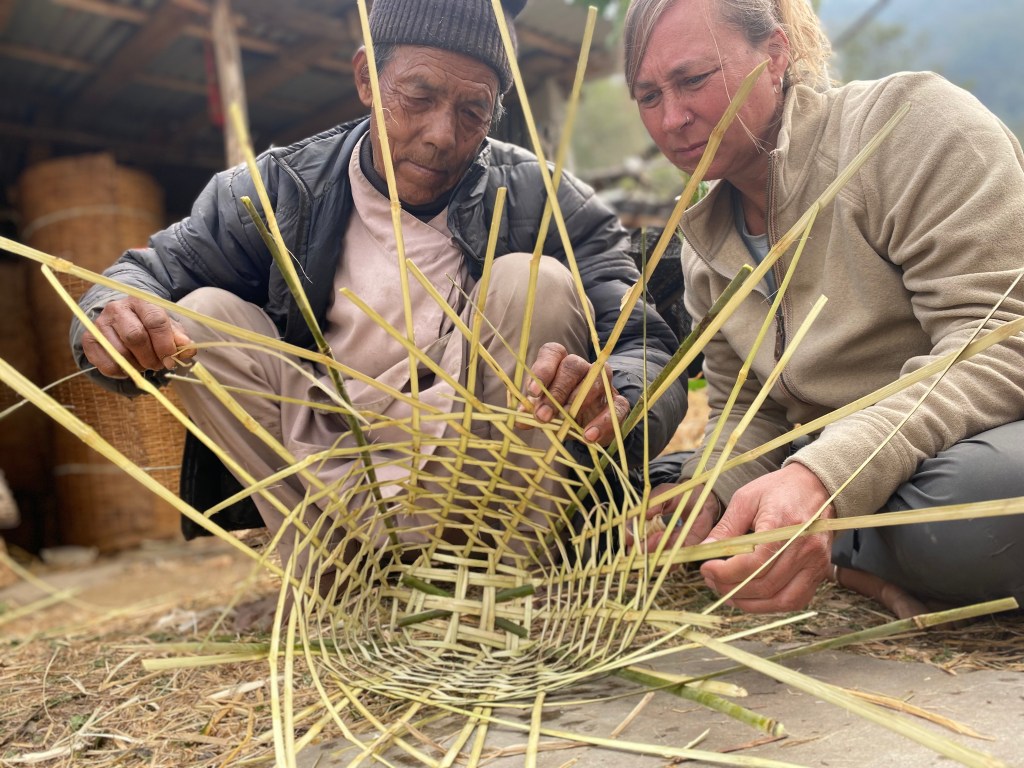
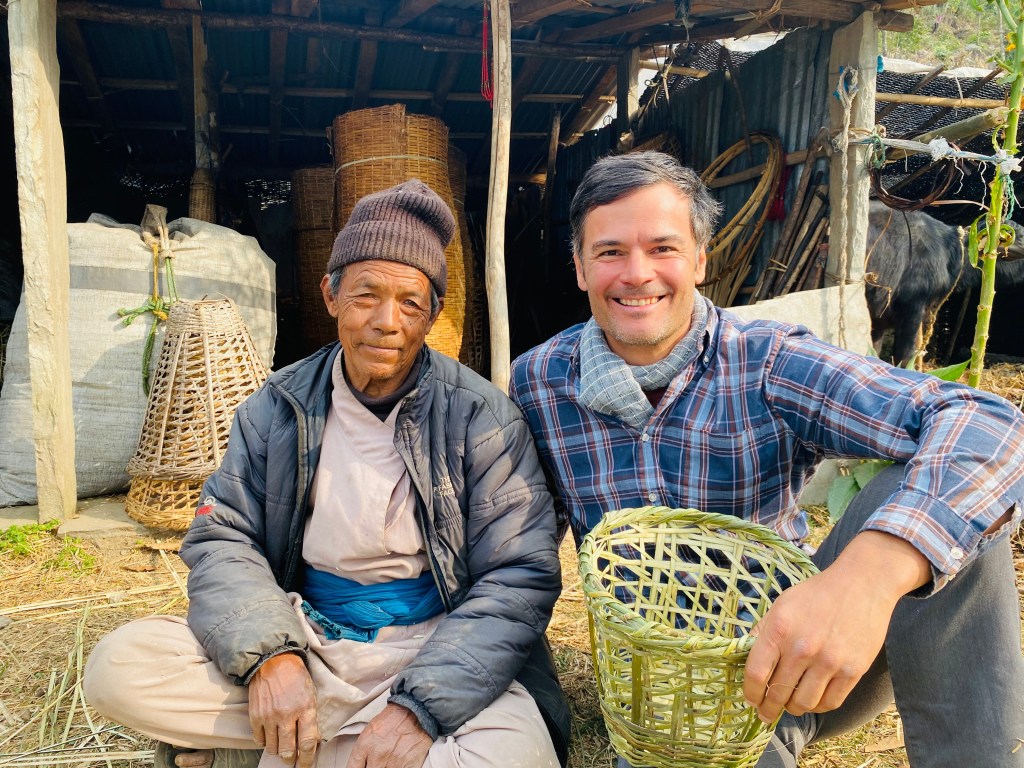
Mason, mom, dad and I sit in a circle watching intently as our teacher Man Bahadur dai patiently shows us how to weave bamboo baskets. He has been making these baskets for nearly fifty years, since his month-in-law taught him, asking the question, “If you don’t learn, who will make them for the family?” At 81 years old, Man Bahadur dai still weaves for hours each day, squatting on the earth, as agile as a cat. He was previously the elected chief of Chaukati after spending three years in prison, falsely accused of being a communist. He laughs as he tells us that it took him nearly that same amount of time to master the art of basket making.
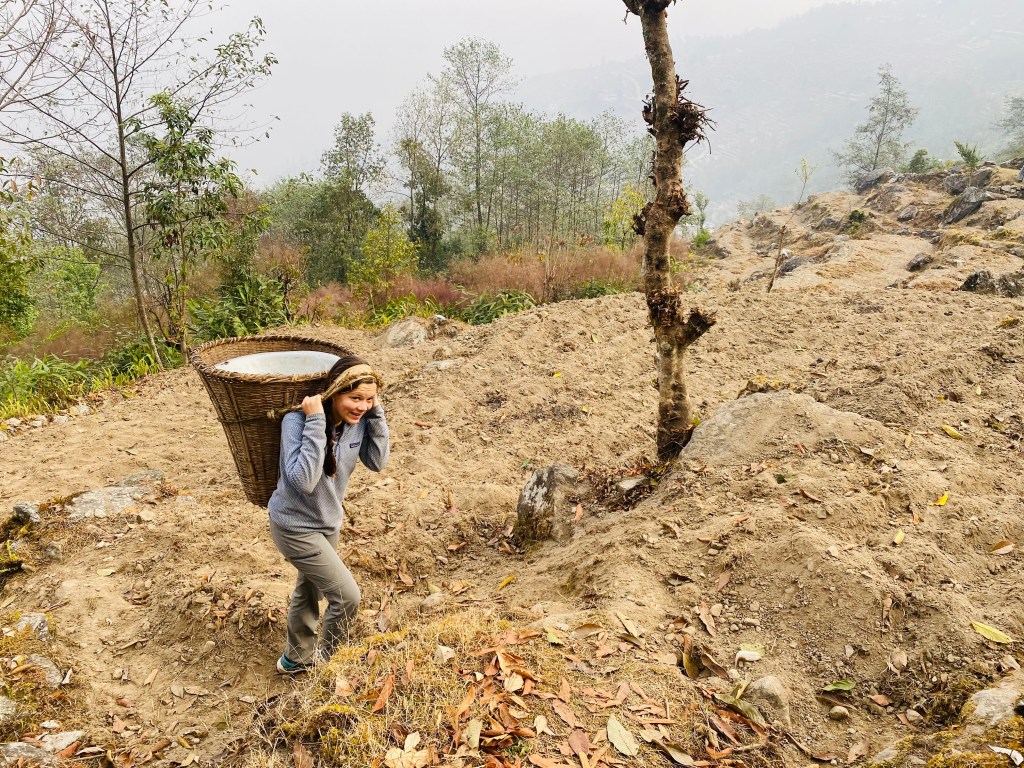
The baskets are used for everything in rural Nepal. Carrying leaves for animal food, stacks of firewood for cooking, and rocks to build roads and trails. In people’s kitchens they are used to hold utensils. They are placed upside down as cages over newly hatched chicks to protect them from predators. They are even used to carry ill or injured people to the nearest health post in place of an ambulance when there are no drivable roads. It’s clear how essential they are to the livelihood of the villagers.
One day, as we walked for a basket making lesson, we saw Man Bahadur dai asleep on the ground, a bamboo umbrella he had woven covering his body from the midday sun. Whether they are working with bamboo, plants, seeds or animals, we could see how connected the villagers are to the earth.
 Bueno Ramro
Leave a comment