by Shannon
Walking through tall grasses in the footprints of Asian elephants, past the beds of Bengal Tigers, our guide Sushila Ji stops and cups her ears with her hands. The Langur monkey sitting atop the crown of the Cotton tree is distressed. “He’s sending an alarm call to his friend the Spotted deer,” Sushila says, “A tiger is on the move over there on the edge of the forest.” The grasses obscure our view and I feel myself drop deeper into my mammalian body, senses on high alert – not as predator, but as prey, a mama protecting her babes. We’ve been told that 27 locals have been killed in the past four years by these feline giants, the second largest of the six remaining species of tigers on the planet. The most recent death three days earlier, only 2 kilometers away. A woman was attacked on the road and dragged into the trees while walking her cattle home after a day of grazing in the community forest.
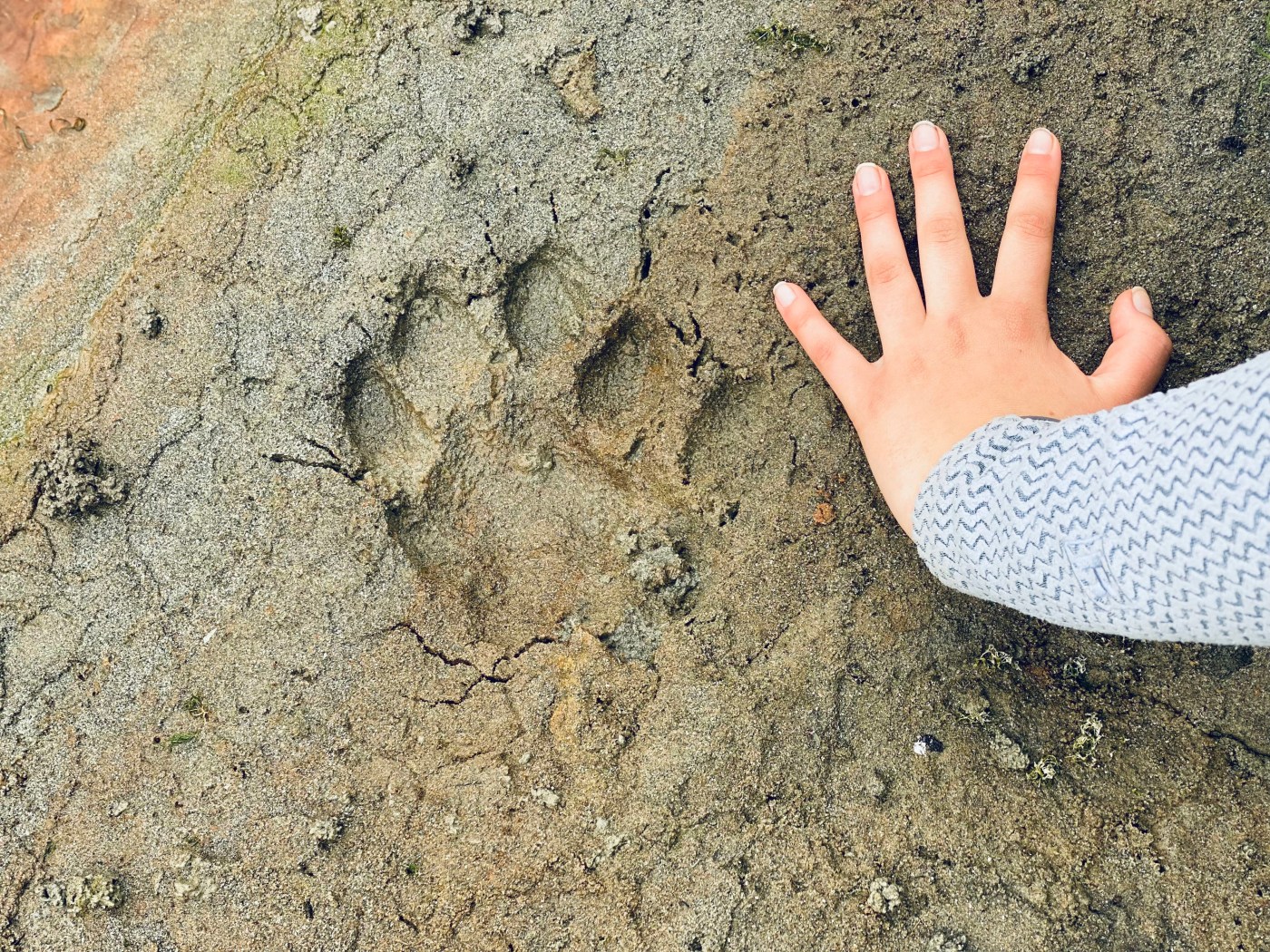
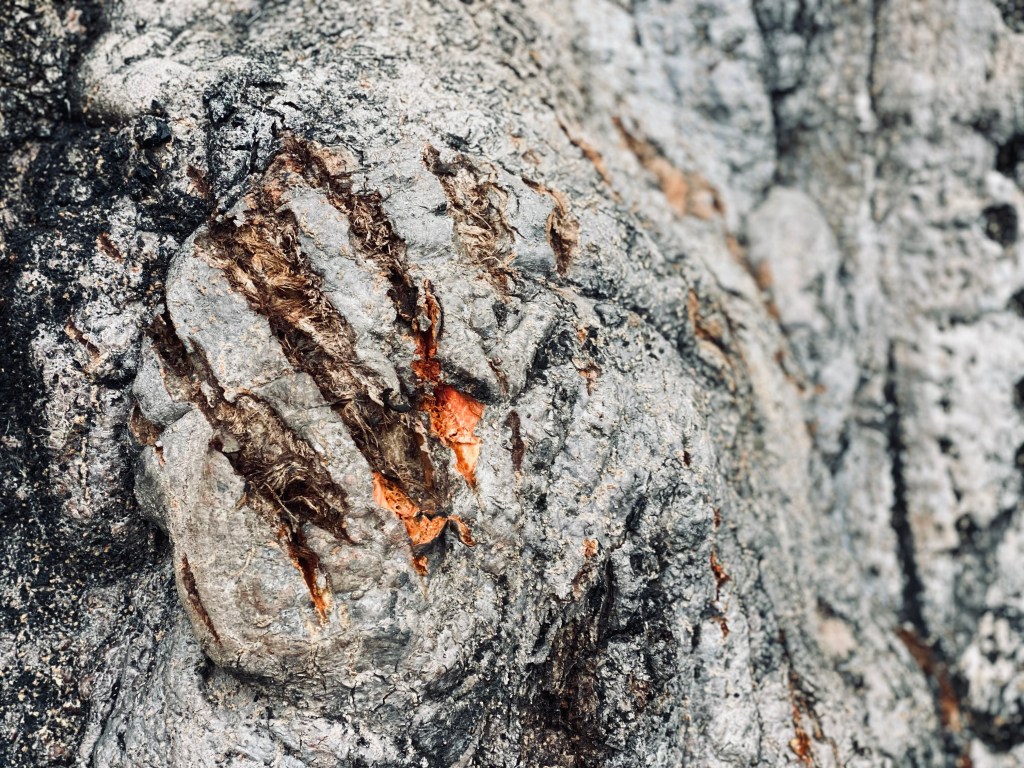
As we walk by large piles of scat, the acrid scent of urine, fresh scratch marks on trees, and numerous paw prints larger than my hand, I start to wonder if maybe this wasn’t such a good idea to bring my kids out tiger tracking on foot. Sushila speaks to us of how highly territorial tigers are, especially now during mating season. She laments that the park is having a hard time getting their rhino population up because the babies are regularly taken within the first 4 years by tigers. What?! A tiger can get through the armor of a rhino? My skin feels particularly thin and vulnerable.
Once the Langur quiets, we make our way toward the river hoping to catch some large mammal coming for a drink or making a crossing. Bookended by our two female guides, Tharu superheroes armed with walking sticks, we pass countless corridors where animals wander this landscape. The river, more active with larger animals in the summer season, is now alive with both resident and migrating birds. According to Sushila there are 530 species of birds that nest or pass through Bardia each year! (If animal numbers excite you as much as they do me, here are some more for Bardia – 121 fish species, 61 mammals species, 30 reptiles species). We watch three of the five Kingfisher species sharing the riverbank, a monogamous pair of Ruddy shelduck on winter holiday from Siberia and a Common greenshank wading through the shallows. Sushila points out the paw and tail prints of some River otters who’ve recently played, as well as the plate sized, three-toed print of the highly endangered One-horned rhinoceros. The muddy river’s edge tells a vivid story that we try to translate. A story that the Tharu themselves are deeply woven into.
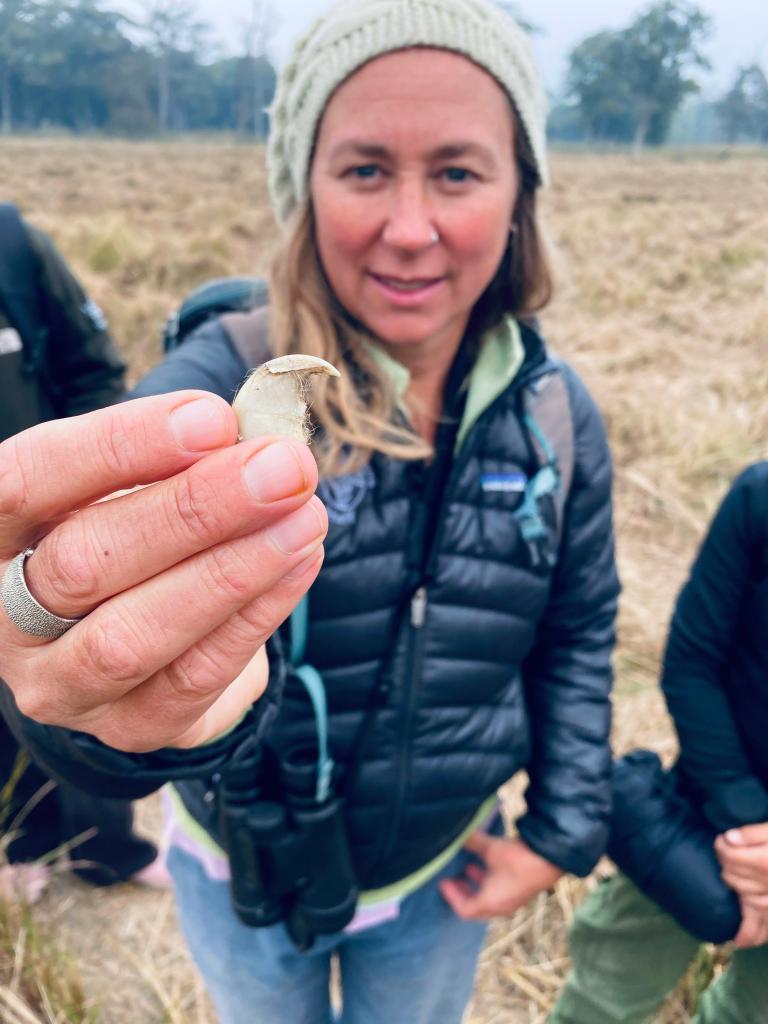
(Photos below: tiger scratches on a Cotton tree; a tiger claw found in a mound of scat!)
 Bueno Ramro
Leave a comment