by Celia
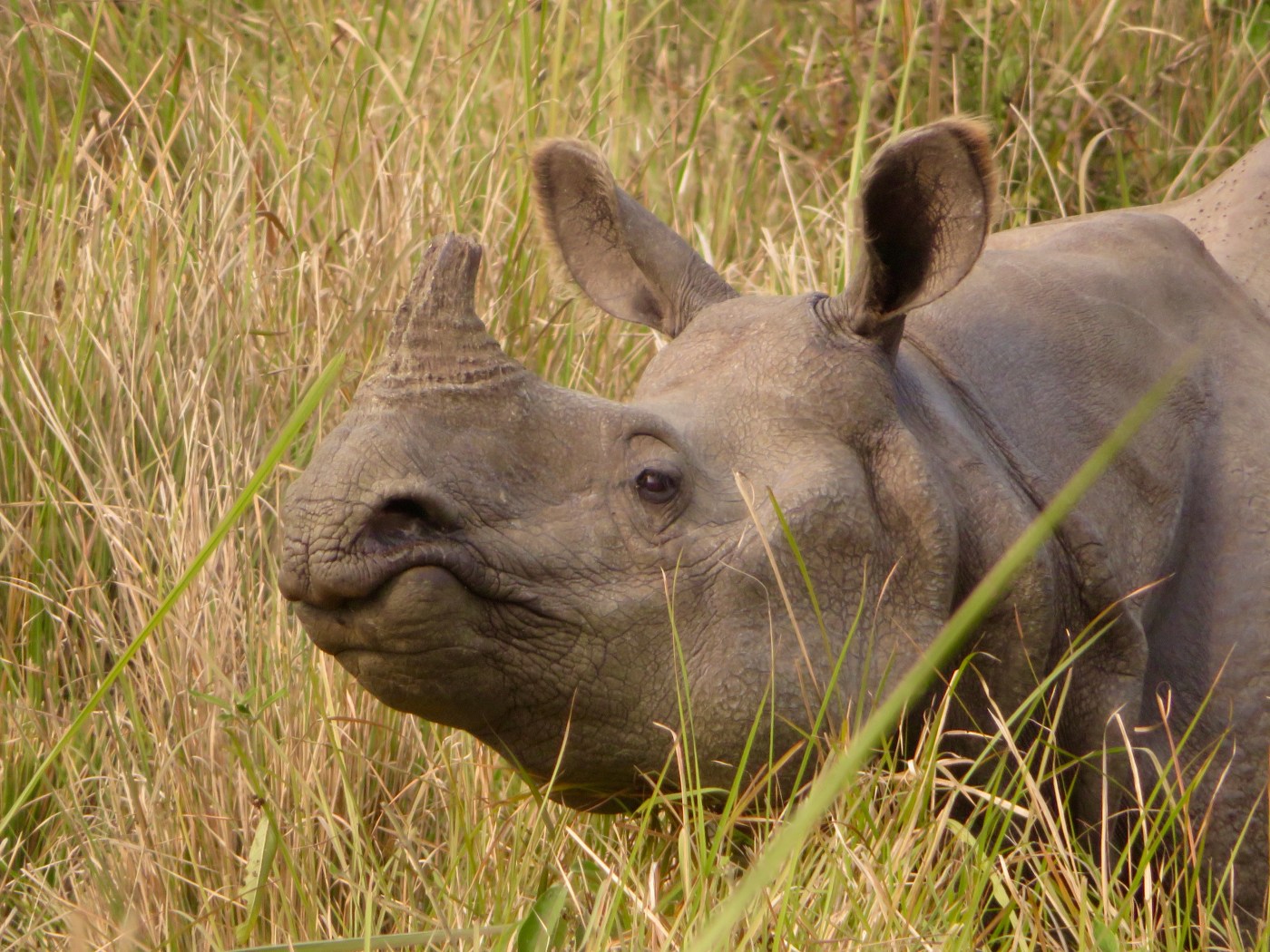
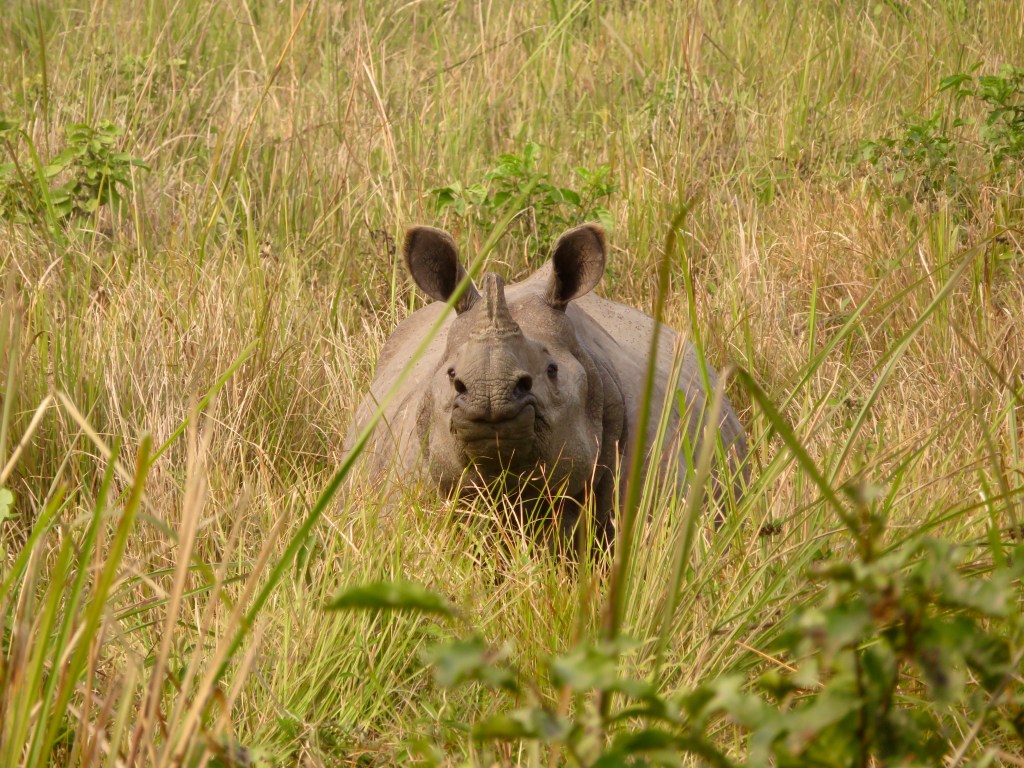
Located in the southern Terai region of Nepal, Chitwan National Park is home to many endangered species. The One-horned or Indian Rhinoceros is one of the main ones. This area is made up of tropical and subtropical forests and grasslands, as well as freshwater habitats. Rhinos, with their tiny mouse-like ears and thick armoured skin, are a big tourist attraction. Along with countless species of birds and deer, we also had the amazing opportunity to see a rhino. We saw not just any adult rhino, we actually got to see a mama with her tiny one month old calf.
We approached them carefully, not wanting to disturb the mother. She was feeding in a swampy area, making loud slurping sounds as she sucked plants into her large mouth, her baby huddled against her. Looking at the calf you could see how vulnerable they are. We learned recently that baby rhinos are susceptible to tiger attacks up to four years old.
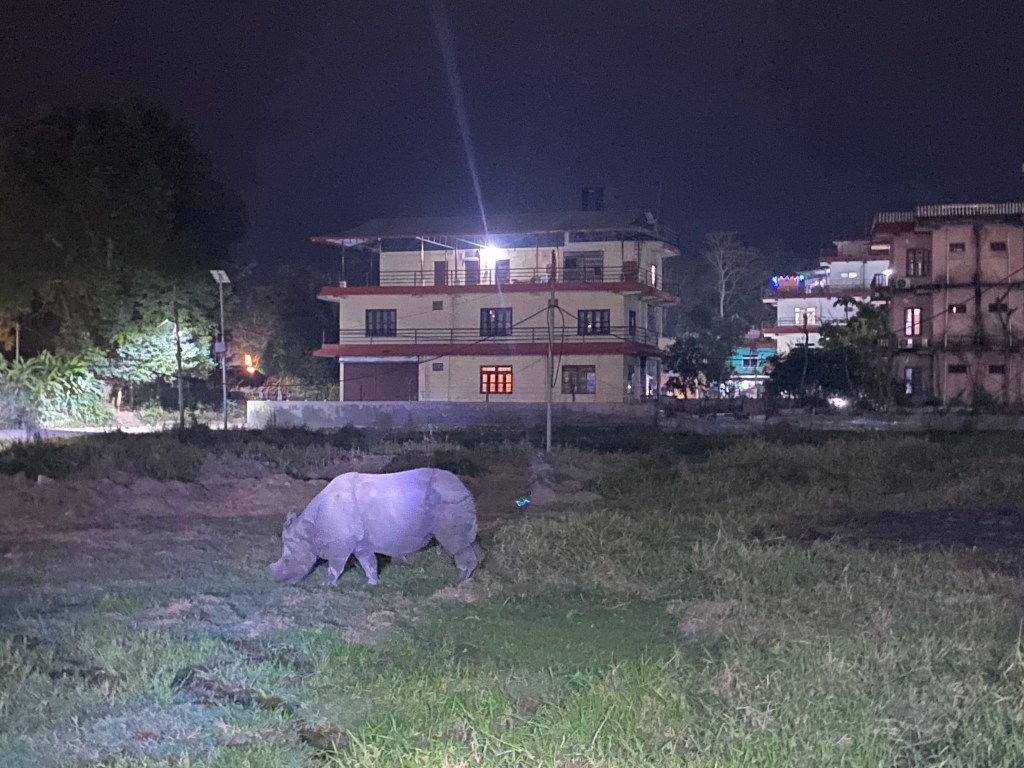
Although the One-horned rhino is only listed as vulnerable and their numbers have gone up from 200 to 4,000 in Nepal and northeast India over the last century, there is still cause for concern. Poaching for their horn continues to be an issue, as does habitat loss, which pushes rhinos further into towns and cities more frequently. Surprisingly, our first encounter with a rhino in Chitwan was in a field near the hotel where we were staying. Seeing this made it clear to us how this can cause conflict between humans and rhinos. Fortunately the Nepali community seems to live well with these wild animals. I hope that others can see the value in this as well.
 Bueno Ramro
Leave a comment