by Shannon
“The trees were bending like tall grass in a storm, lying almost completely on the earth then springing back. Every time I stood, I was thrown down to the ground. Big rocks were rolling down from the mountain. The houses were shaking and then the one in front of me crumbled.” Her voice is soft and rhythmic. There’s no urgency in her words. We sit on mats woven of wheat stalk upon the clay floor. The fire that cooked dinner, now warm embers casting shadows upon us. It was the second of three earthquakes in 2015, an epicenter just miles away, that flattened all but a handful of the original stone and clay homes in this village, destroyed most of the walking trails, and brought the school to a mound of rubble. Thuli didn’t share this story with me when I last visited two years after the earthquake. I had a brief stay and too many people were gathered. Now, two days after we all woke to their new cement house shaking at 2 a.m. with a 6.4 quake, her stories are stirred and spill forth in gentle waves.
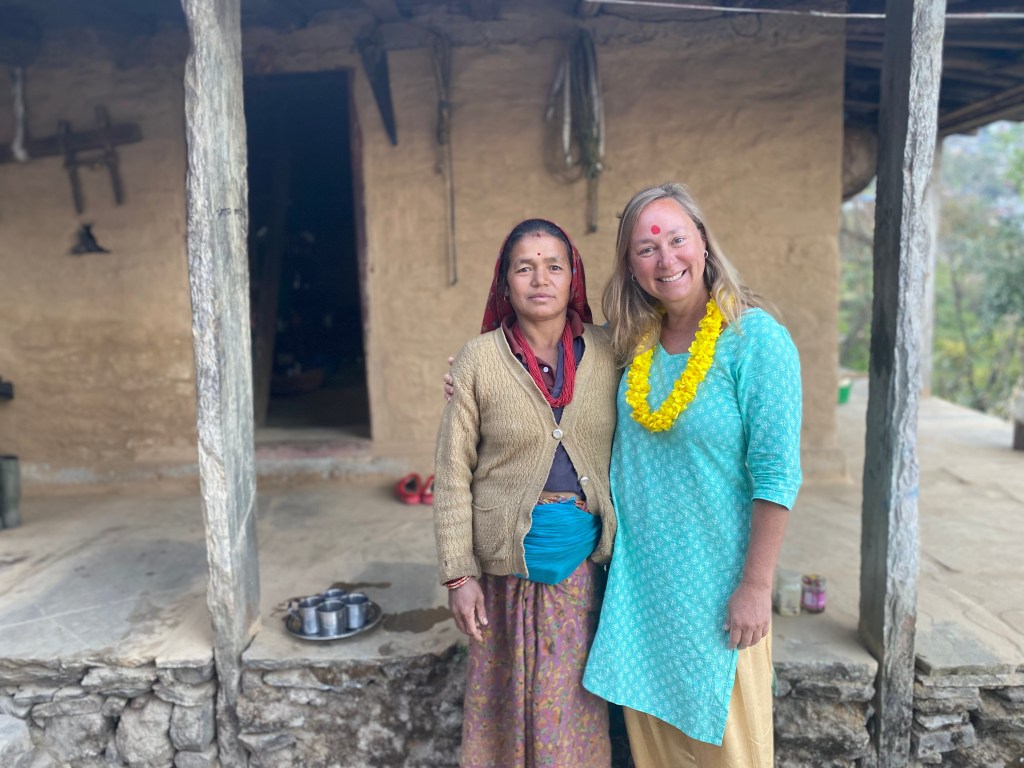
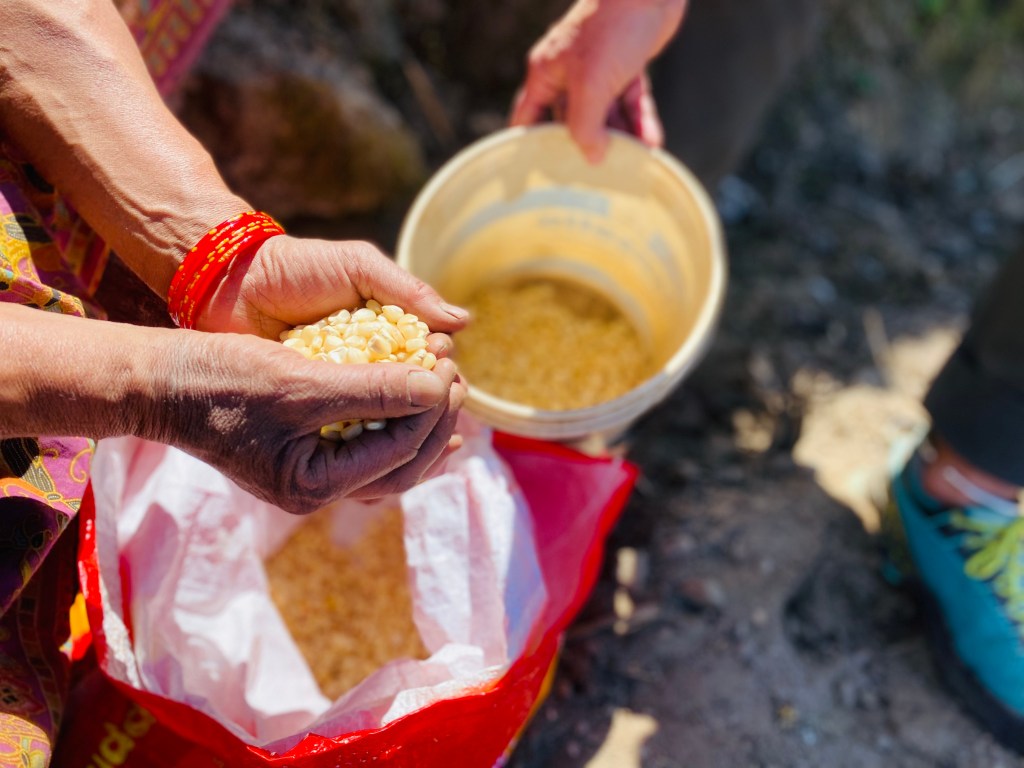
I’ve always been mesmerized by this woman, her humble beauty, her gentle way. I first looked into her eyes 27 years ago, both of us 23 years old. She was already a mother to four, only two living. Over the years since, she’s carried and birthed five more children, nine in total. All of them upon the clay floor, alone. Four have survived and are now adults living in Kathmandu Valley. She carefully places kernels of corn between us, picked from the seeds she’s been planting in the fields all day. She lays out each piece to explain the birth order – eight girls and the final a boy. Even a set of twins, though she didn’t know as she carried them both, cozy in her womb. The first was born, suckled and was set to sleep when the contractions persisted The second little girl was born without breath two hours later. Her older sister only had five months before she joined her. The lucky survivors are moved to the right, the lost to the left. I can’t stop staring at the corn. I can’t stop the swell of grief inside.
On that cloudy April day 10 years ago when the earth shook for more than 30 minutes, Thuli’s four children were still living at home. It was Saturday afternoon, the family spread around the village, Thuli in a neighbor’s field working, the kids up in the forest with the goats and gathering feed. Had they been at the school or in the house, they too would have been dead, buried beneath slabs of slate roofing. All the corn kernals upon the floor in the pile to the left.
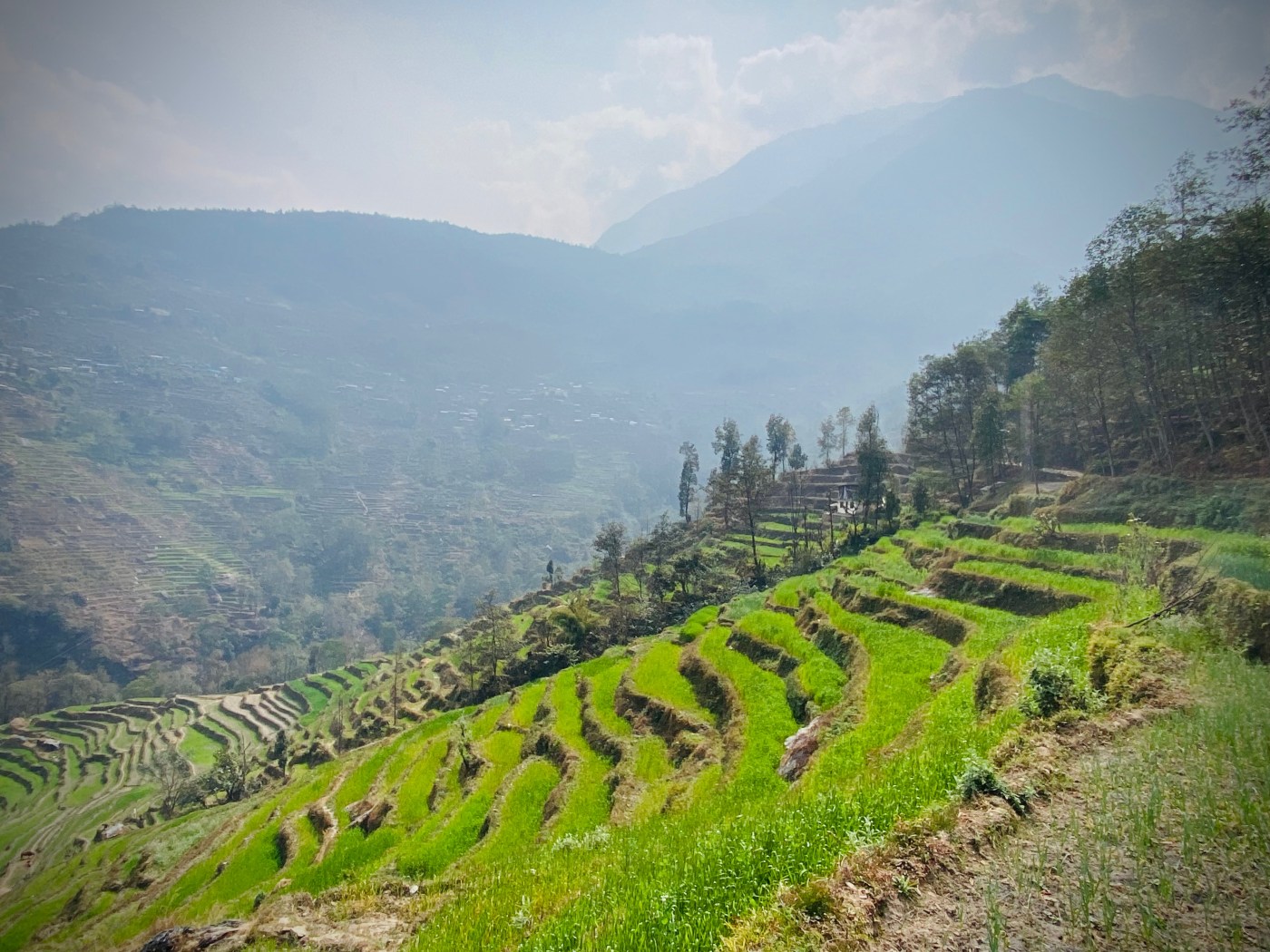
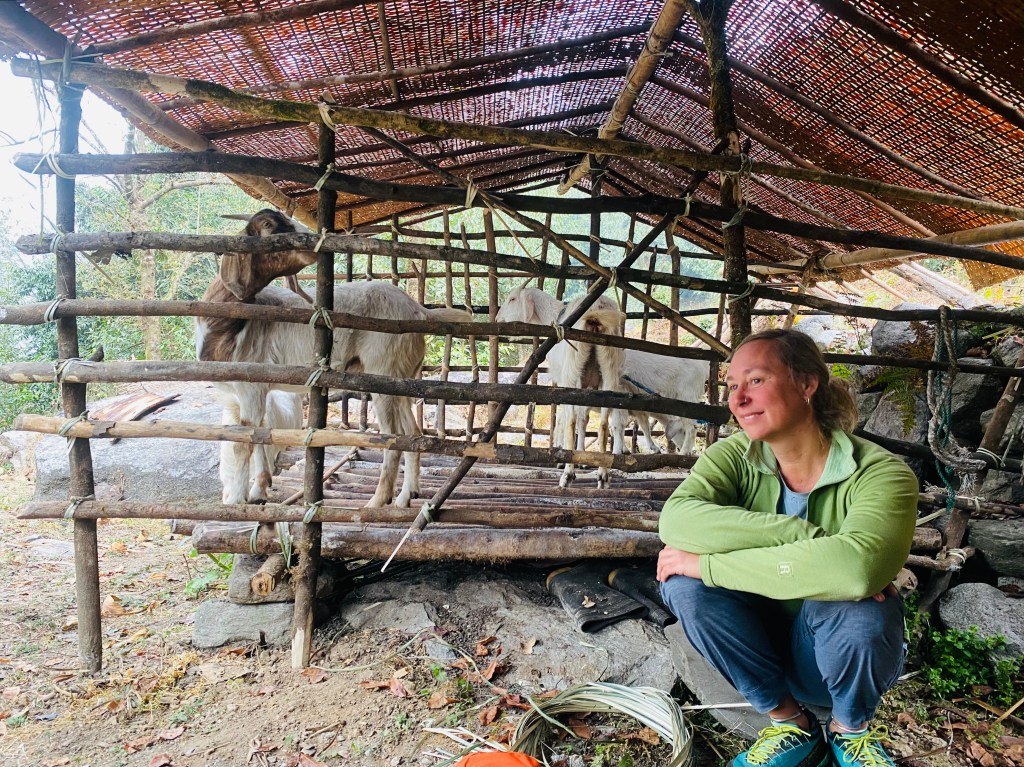
Thuli’s is just one story of countless seeded in these terraced folds, her hardships planted in the deep furrows the oxen pulled plow dig. Each year the corn grows, life rolls forward at its steady, slow pace. The fields are tended, the animals fed, the firewood harvested , the baskets woven, the food stored, the wisdom passed on… cycles unbroken for generations, rhythms of reciprocity fortified.
The morning of our departure, after ten days of witnessing the skill and being offered the generosity of this community and our dear family, Thuli pulls me aside. We duck into her clay home and she sets a bag of corn seeds into my hands. “Plant these in your field. Plant a Chaukati garden at your home. Think of me and I’ll think of you,” she says. A necklace of yellow flowers placed on my neck, red tika on my forehead, tears spilling, I embrace her. What an honor to know this woman, to have received a piece of her story, to plant some of her soul seeds within the earth that holds and nourishes me and my family.
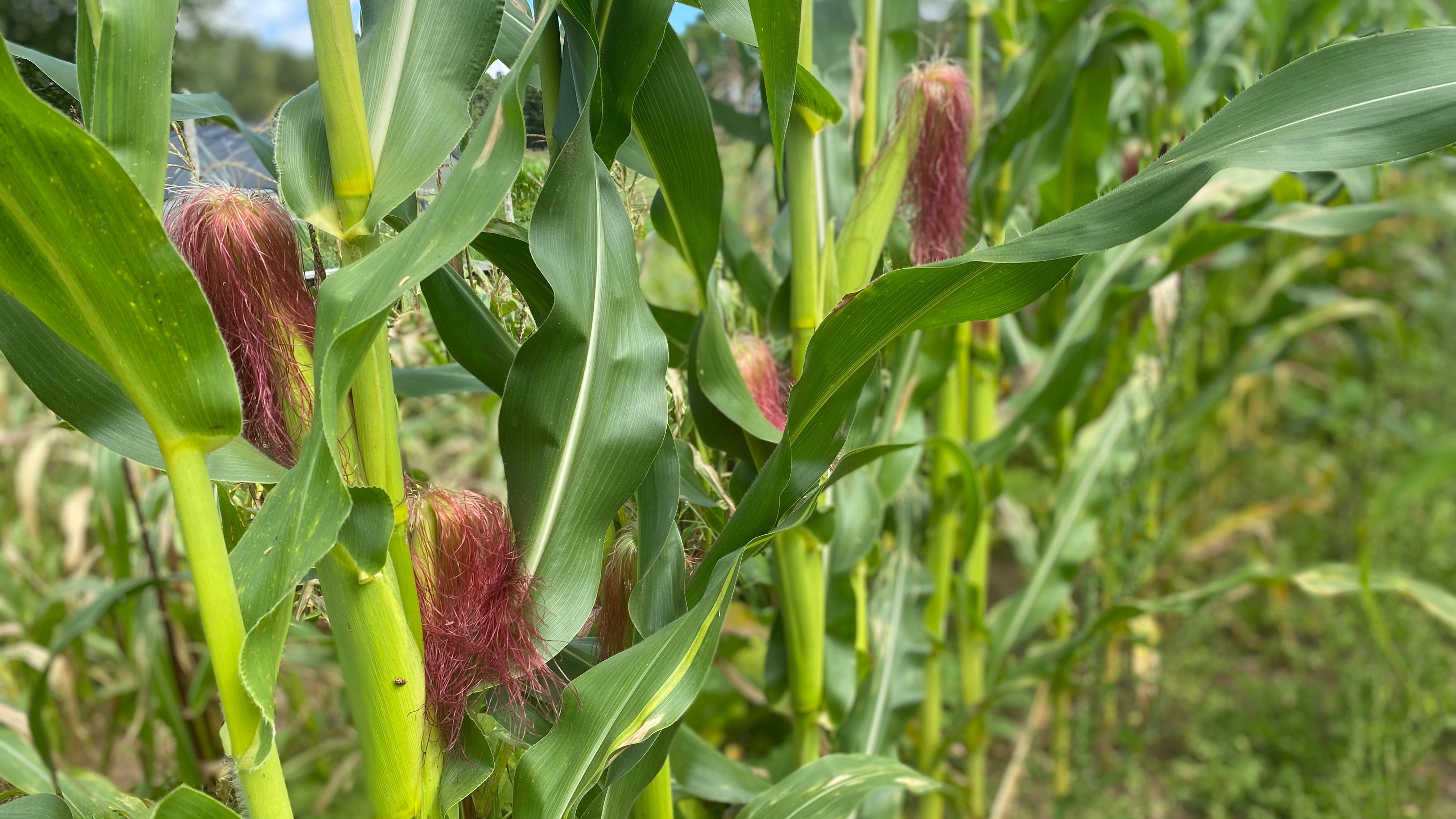
Chaukati corn growing in 2025 on Allegheny Mountain
 Bueno Ramro
Leave a comment