by Tim
“This is our retirement plan.”
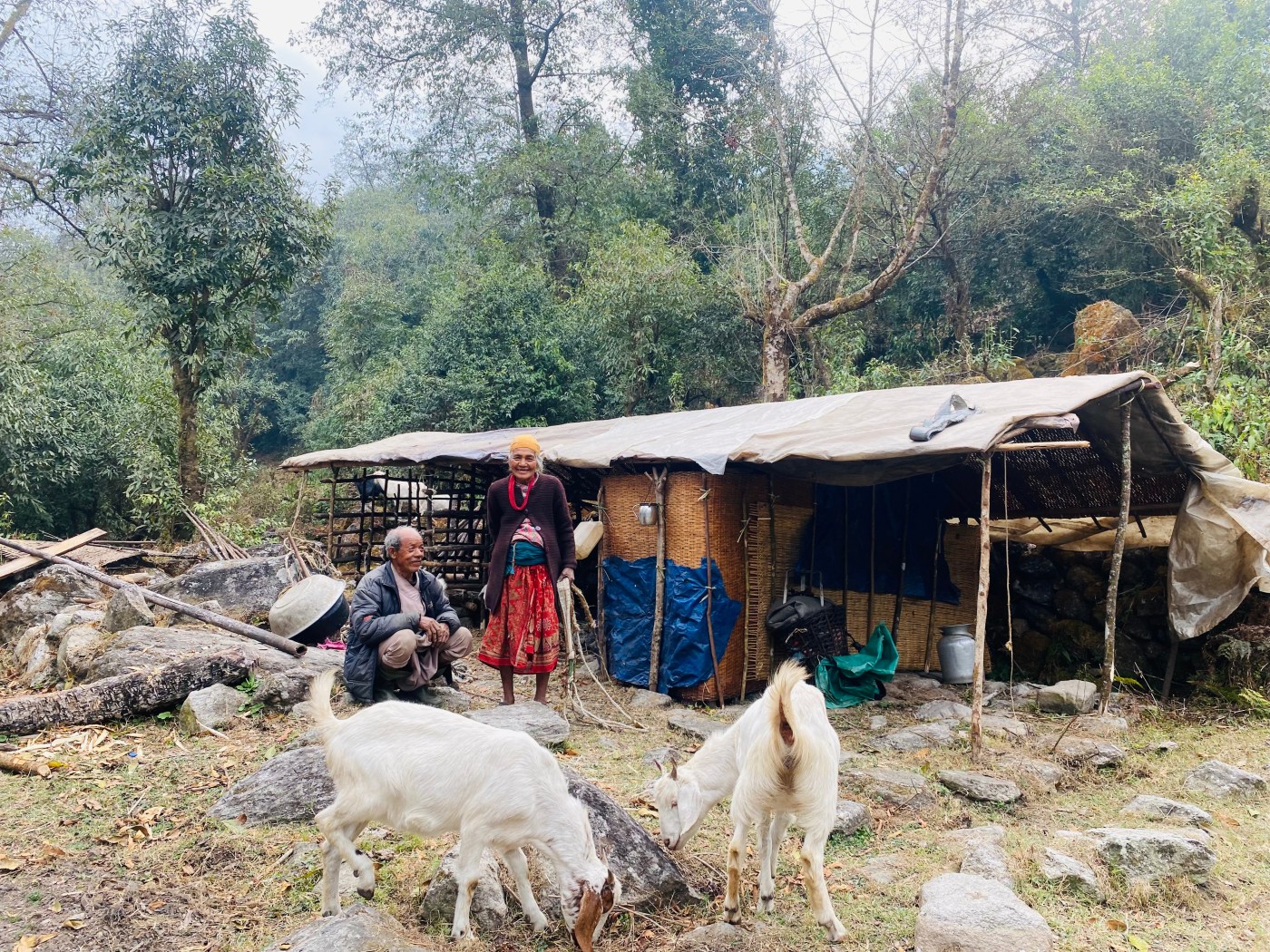
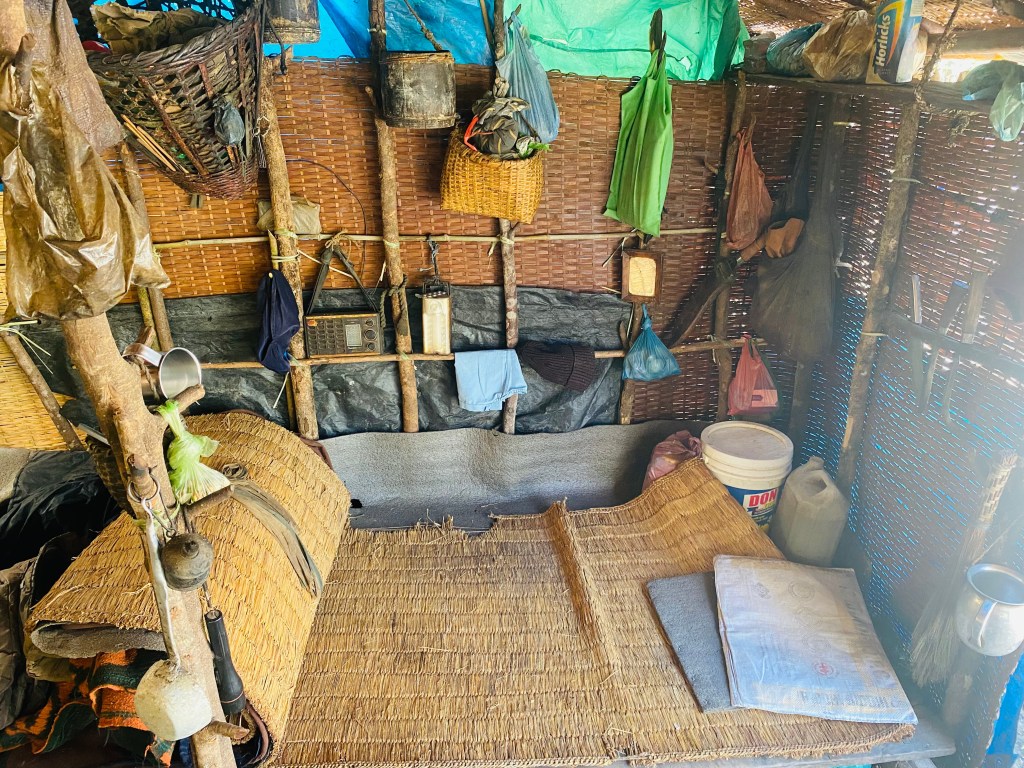
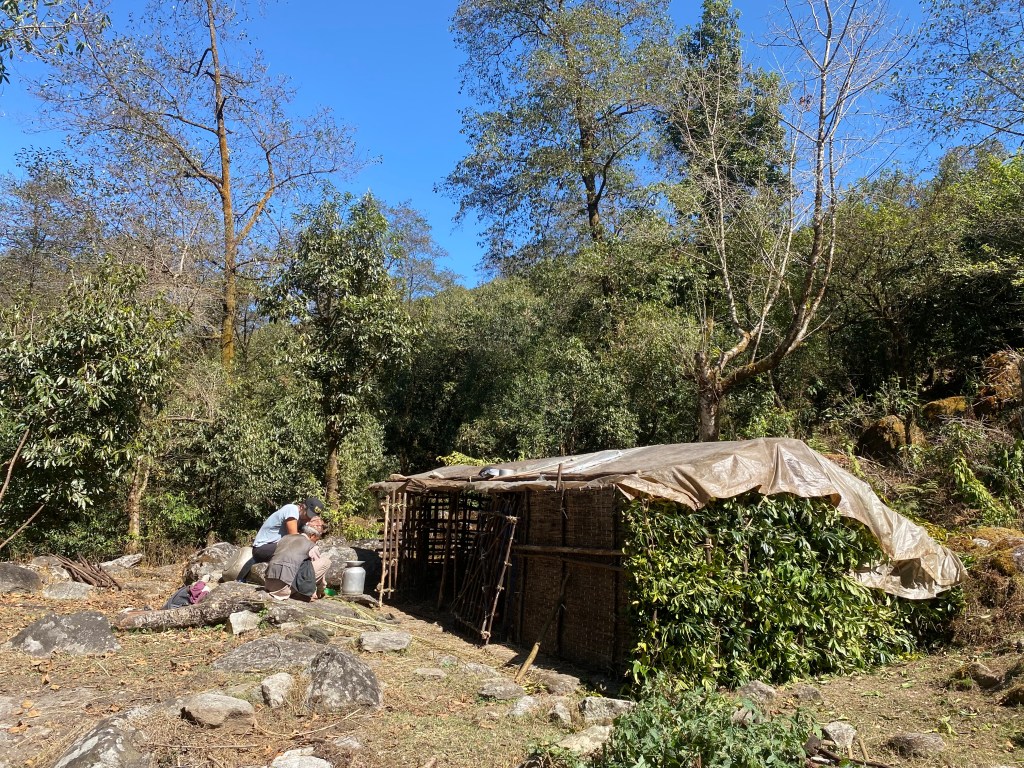
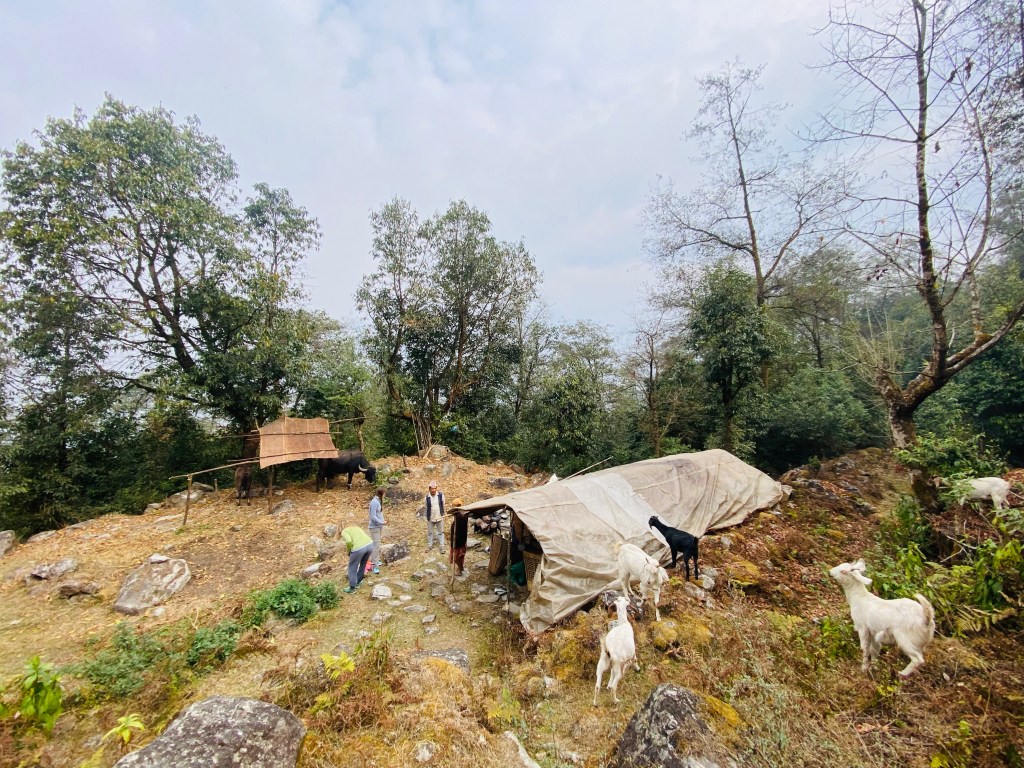
She’s serious. We’ve just carried baskets full of pots and pans, kitchenware, odds and ends, up into the jungle to a seasonal shelter called a ghote. We carried them in the traditional way, on our foreheads with the namlo strap. Our atrophied neck muscles ached. Ama and Baa, the household elders, retreat here to their ghote every spring with their animals (yes, there are goats in the ghote, and water buffalo) to spend half the year closer to the forest fodder. We had planned to help them with more of the move, including the woven bamboo walls they set up each season. Each one must weigh around 70 pounds. Before we could get to the task, Baa had already schlepped the three heavy loads up the mountain, leaving us with the lightest loads. He is 81 and Ama only a bit younger.
Shannon says it again, this time to Celia and Mason, “If you want to find us when we’re older, look for us here.”
Retirement is a beautiful word, and even a wonderful concept. With the roots of re and tire it is a drawing back or removal. Admittedly, the Spanish word, jubilado, sounds a bit more fun. A jubilant celebration. May it be so. In Hindu life this is the fourth Ashram, which is truly a momentous, cyclical return to the source of life. Preparing for rebirth. Shannon and I admire the way that Baa and Ama recognize this and embody it. They are slowly allowing their very existence to be reabsorbed by the mountains and forests. They spend more time in the ghote each year. Every cell in their body is built from these fields, forests, and streams and will return to them. The stone steps heading high into the jungle perennially coated with their sweat and discarded skin from their feet. On any given day you may find Baa sleeping flat on the earth in the afternoon. They are literally retiring, or “drawing back” to our earth.
For economic, as well as spiritual reasons, retirement in Nepal is dramatically different from retirement in the US. The dream of retirement in Chaukati is not a “drawing back” from work, but rather a change in the goals of work. Work continues, even demanding physical work, but definitions of work expand to prioritize the spiritual kind. What is most profound in this version of “retirement”, or the fourth ashram, is the acknowledgement that we shouldn’t arrive at the final initiation into this life’s great mysteries unprepared. We should carve out time to prepare. With that, perhaps we can arrive at the initiation humbled, at peace, and curious to lift the veil.
 Bueno Ramro
Leave a comment