by Tim
Find a globe. An old school, 3 dimensional globe. If you can find one with some topographical texture, even better, but any globe will do.
Give it a good spin and trace your fingers along the equator, noticing that space between the Tropic of Cancer in the north and the Tropic of Capricorn in the south – what we call the Tropics. That zone that maintains a mostly consistent angle with the sun throughout the entire year. These are 50 of the globe’s total 180 degrees of latitude. All considered, it is very little land. Only around 40 percent of the earth’s total land surface exists in the tropics, mostly in South America and Africa, but on that land around 80% of the earth’s total diversity makes its home. Now, notice how the majority of that space is vast ocean, containing over 90% of the earth’s marine diversity with nearly all of the coral reefs. Closing our eyes we can picture the psychedelic corals, and outrageous colors and forms of tropical fish such as parrotfish, scorpion fish, mahi mahi, or manta rays.
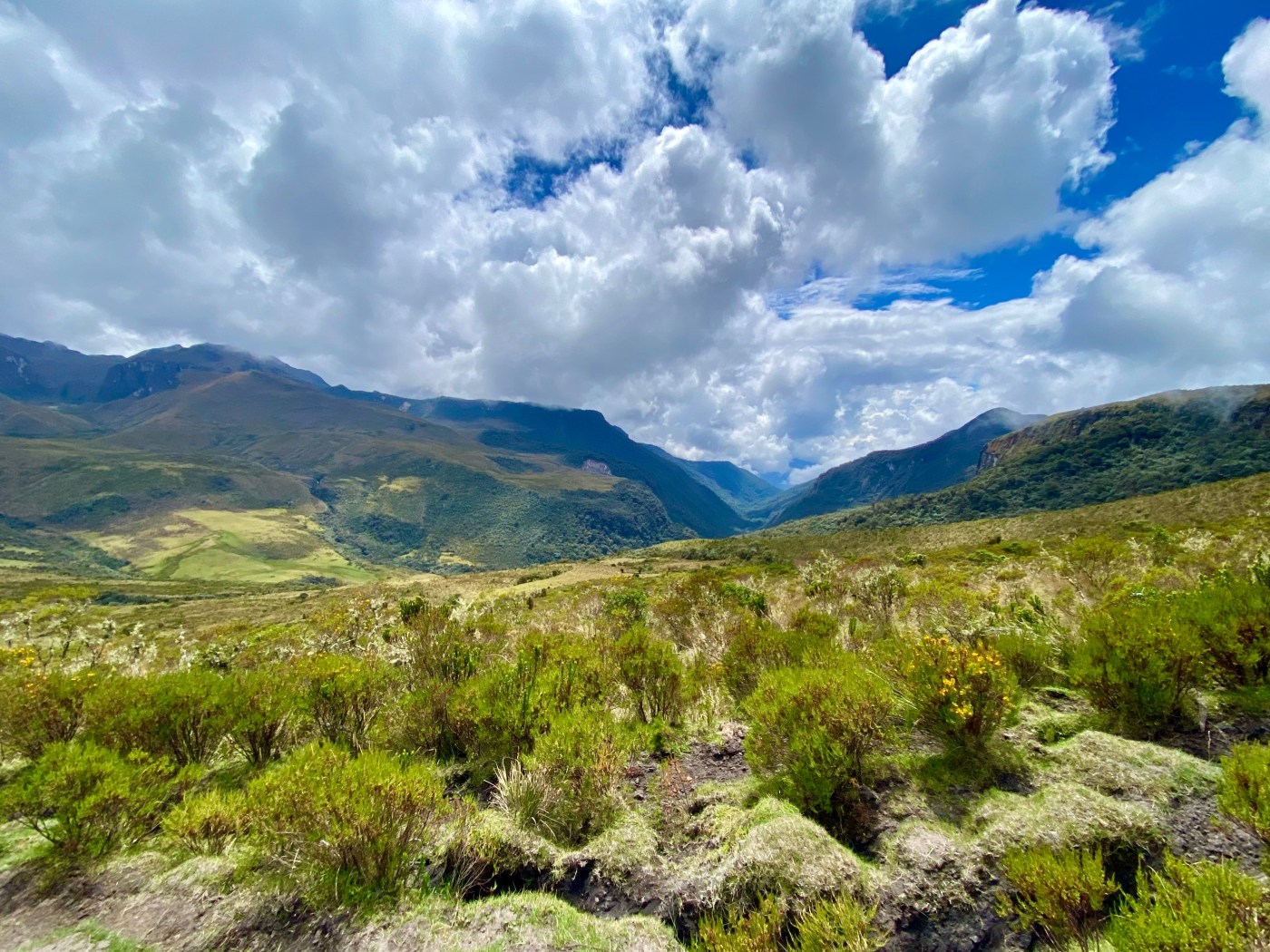
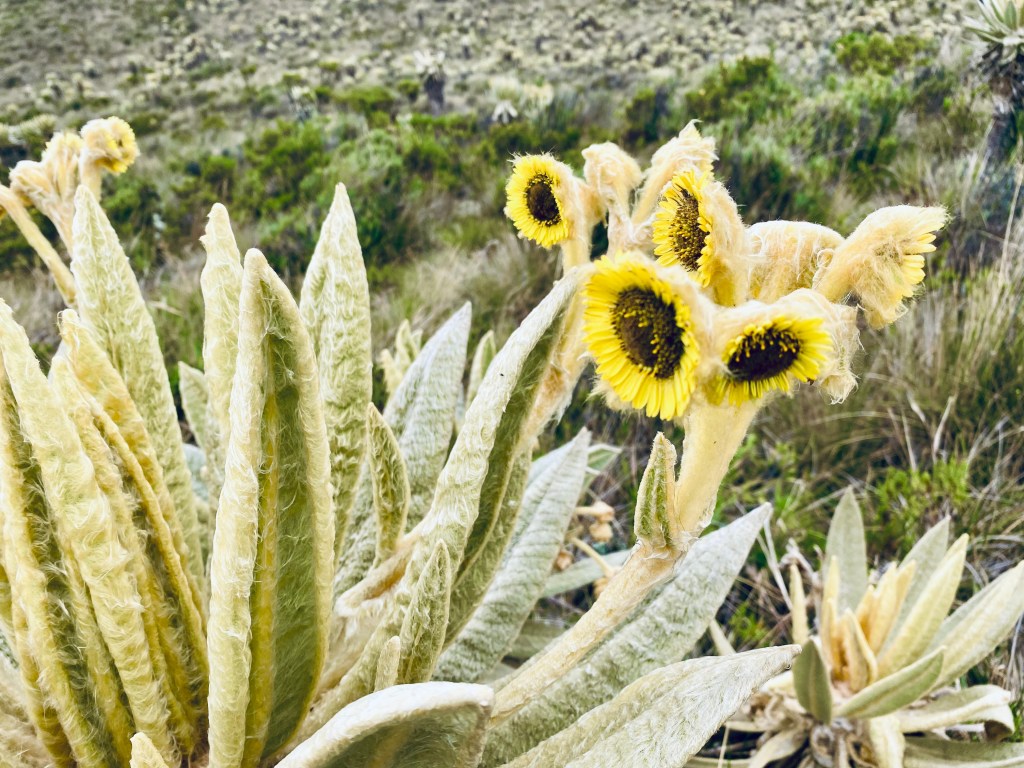
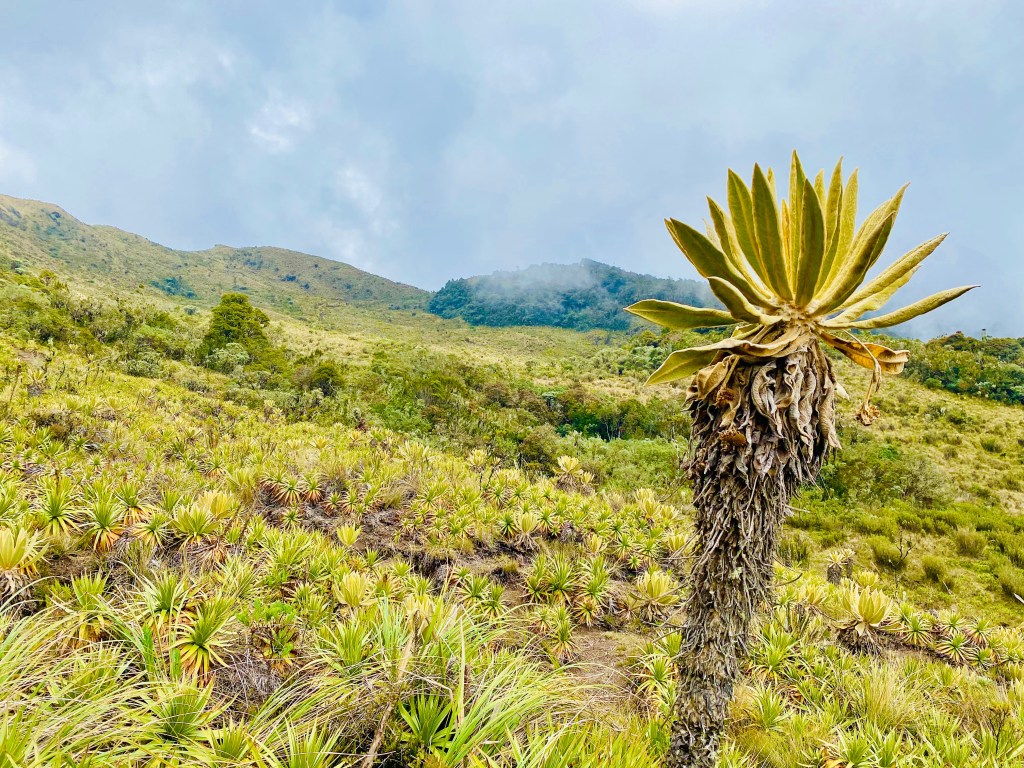
If you have a textured globe, reading the surface like braille, you notice that the tropics are mostly flat, but in three distinct places massive mountains press into your finger tips. These are the world’s tropical alpine zones, and they only exist in Central and Eastern Africa, Indonesia, Papua New Guinea, and, most importantly, in tropical South America. The Andes contain at least 90% of the world’s tropical alpine zones. These zones are reservoirs of endemic species, and also intimately connected to the Amazon rainforest below. They act almost as the rim of a bowl, holding the moisture of the world’s largest rainforest, often in the form of glaciers or wetlands, and slowly releasing it back to the forest. In Colombia, Venezuela, and Ecuador these alpine areas are known as paramos, mystical places draped in fog most of the year, and the haunt of spectacled bears, condors, mountain lions, dwarf deer, and some of the wildest plants such as the frailejones (Espeletia spp.) or the Puya raimundi in Bolivia (there the alpine zones are known as the puna, or altiplano).
Alpine tropical zones are also some of the most susceptible to climate change, as the snow line climbs ever higher and rains more irregular. Where the precipitation of the rainy season once fell as snow and was stored in the reservoirs of glaciers, slowly released during the drier periods, now it falls as rain and quickly flows into the rivers. Or the precipitation simply doesn’t come. This disruption of the hydrologic cycle has huge impacts on the Amazon rainforest below, causing a positive feedback loop wherein: less precipitation falls in the mountains, leading to drier forests which have less evaporation, which leads to even less precipitation, etc. The Snows of Kilimanjaro are nearly entirely gone, and the glaciers in Colombia are sad remnants, dying a slow death on the highest summits.
Now, before you put that globe back, play that old game. Close your eyes and give it a good spin, letting your finger drag. As it comes to a stop, feel that tingle of anticipation in your belly, and the excitement of a journey unfolding in the dream world. Where did your finger land? Tahiti or Makatea in French Polynesia? The Simian Mountains of Ethiopia or the northern jungles of Sumatra? The middle of the Indian Ocean, or maybe the paramo of Colombia’s volcanic highlands?
 Bueno Ramro
Leave a comment