by Tim
Beneath the fields of yellow flowers lie layers of storied soil. Yearly depositions from the Karnali River, scooped and scoured from the Himalayas and carried ever downward. The clay rests around two meters down, beneath the crops and the thick silty loam soil.
We are made of clay, the old myths say.
I learned recently that clay is the likely substrate of early single-celled life, so those old stories may be more literal than metaphorical. Tharu culture in the southern Terai region of Nepal is in deep relationship with clay: for wood-stoves, food storage, daub walls, and floors. Gray, red, orange, and yellow clay tints – the locale determines each village’s available pallet.
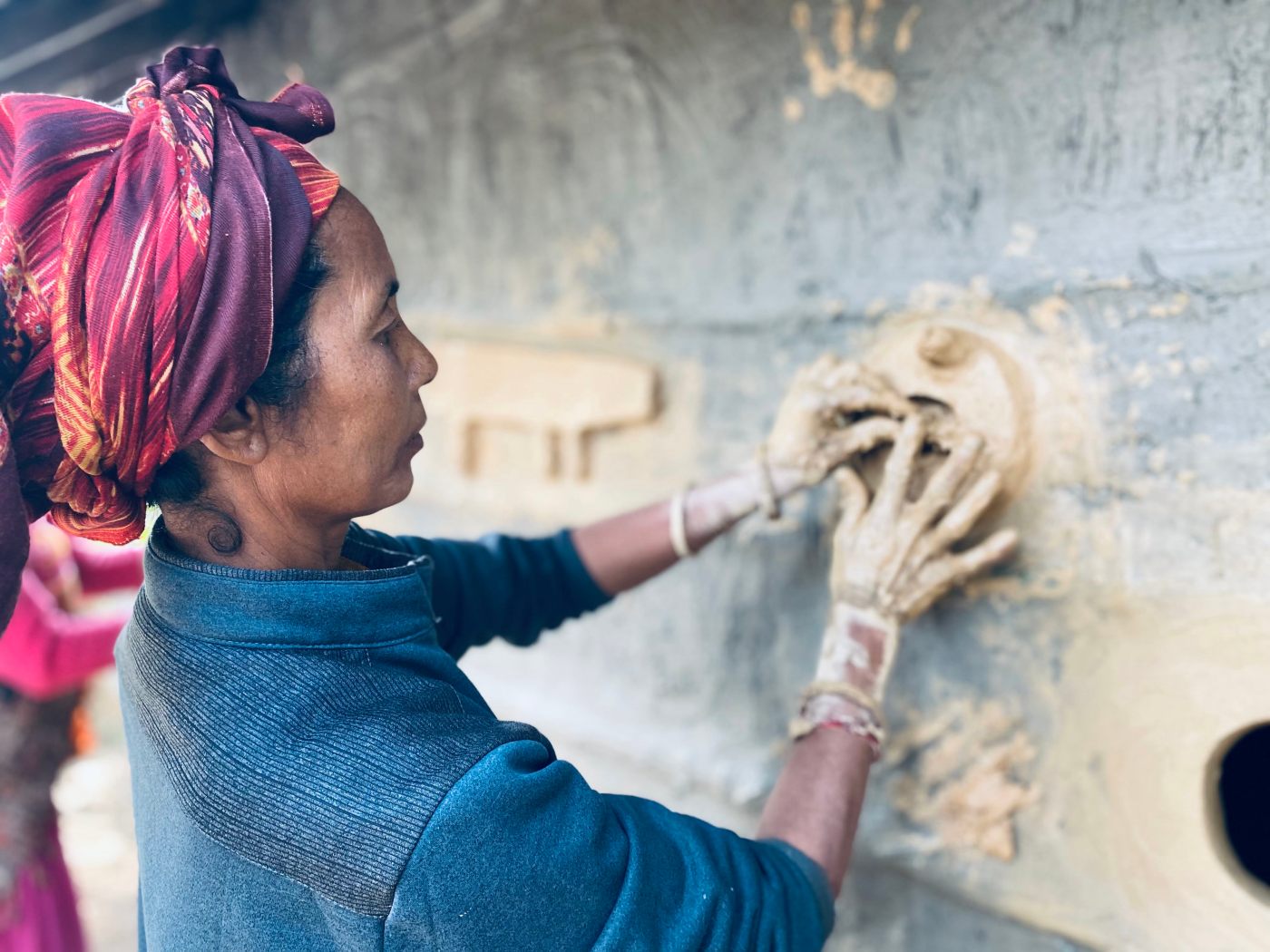
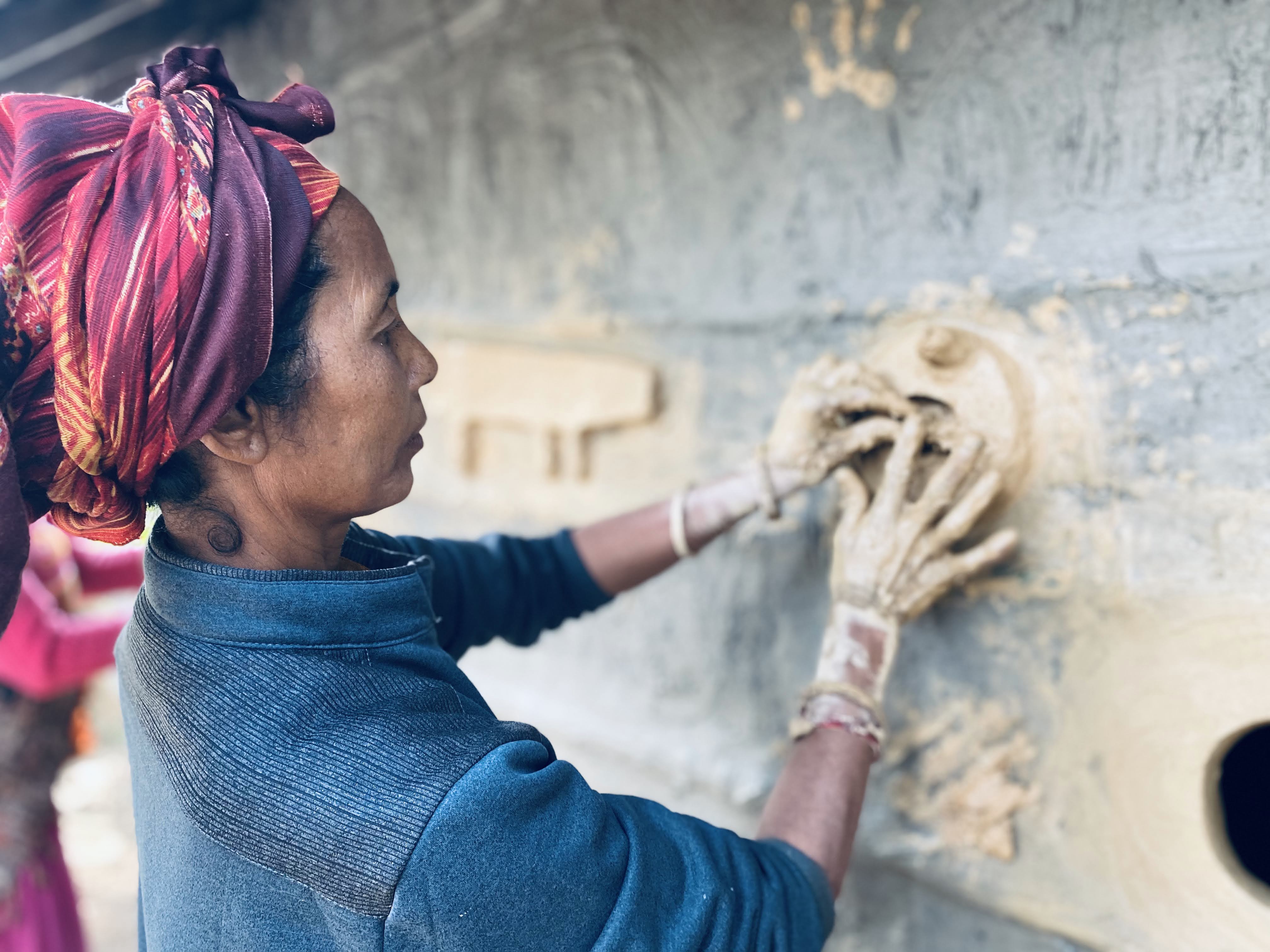
Only the women work with the clay, quarrying from the two meter pit in the fields. How many generations have worked with this same clay? They smile and laugh as they carry 60 pound pails on their heads to the work site. As we attempt to help our Tharu homestay family mix this clay with a variety of other ingredients for the floors and walls, we see culture literally rise up from the earth beneath our feet.
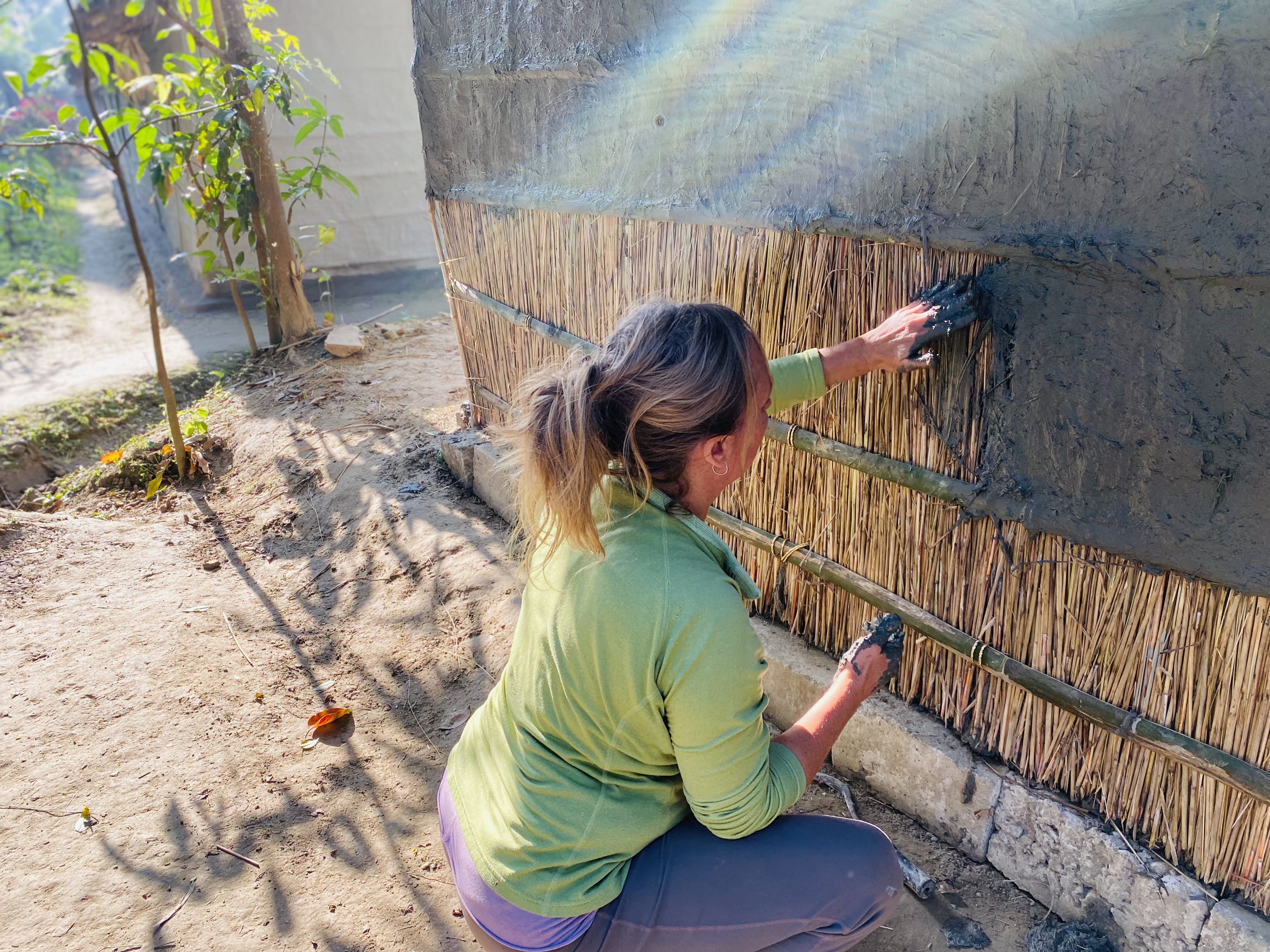
Concrete is replacing mud even in this village, largely explained as protection from the local wrecking ball known as the Asian elephant. Imagine that, an elephant smashing your home. Yet this family is still working with clay. I lay in bed one evening taking stock of the home and found that with the exception of thin plastic twine tying the bamboo frame together, every single component of the home will return to the earth and be gladly received by her – bamboo, straw, earth, dung. No forever chemicals. No rusty nails. The Tharu village of Hattisar and our homestay with Ram Krishna dai revealed so many other ecological threads of this earth-bound culture.
We witnessed absolutely no trash produced by the family in our two weeks there, and only drops of fossil fuel inputs. A nearly imperceptible carbon footprint. As our family tries to eat and live locally, some staple foods are harder to source locally than others. Grains, spices, and cooking oils are particularly difficult. Mustard seed oil is the only oil used in this household, and this time of year the fields are painted in the buttery yellow of the mustard flower, above the loam and the clay.
 Bueno Ramro
Leave a comment